
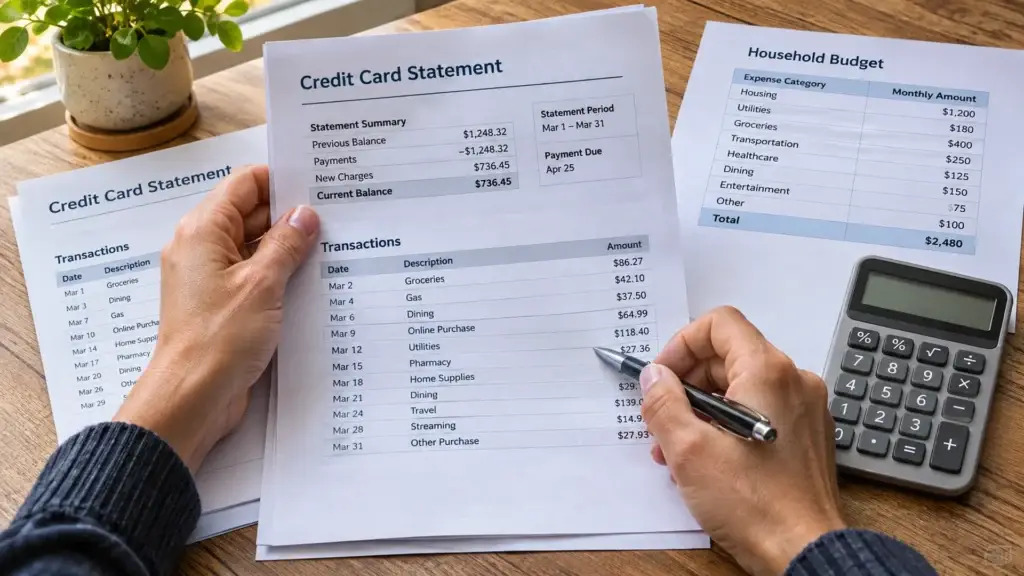
If you are only making minimum credit card payments and your balances are barely moving, it is time to review whether your repayment plan is affordable. Start by comparing your interest charges, new purchases and available income, then seek debt advice if you cannot reduce the balance without borrowing again. You do not need to wait for a missed payment to ask for help.
Before holiday shopping adds another expense, look at what your current payments are achieving. An account can be up to date while the debt behind it remains difficult to repay.
Why Minimum Payments May Leave You Stuck
A minimum payment is the smallest amount your card issuer requires by the payment due date. It keeps you from missing that required payment, but it does not mean you are on a fast or affordable path to clearing the account.
Part of your payment covers interest and any applicable fees. Only the remaining amount reduces what you borrowed. Additional purchases can replace that progress before your next statement arrives.
For a simplified illustration, suppose you owe $5,000 at 20% annual interest. Dividing the annual rate by 12 gives approximately $83 in interest for one month. A $150 payment would reduce the balance by roughly $67 before new purchases or fees.
This is an illustration, not a lender quote or repayment forecast. Actual interest depends on daily balances, transaction dates and the card agreement.
If you then charge $100 for groceries, your balance could rise despite making the payment. The issue is not necessarily a failure to pay. Your monthly budget may depend on credit to cover ordinary expenses.
What Your Credit Card Statement Can Tell You
Your statement helps you distinguish keeping an account current from actually paying it down. Look for the interest charged, minimum amount due, payment deadline and estimated repayment period.
Federally regulated card issuers must show an estimate of how long repayment would take using minimum payments. Treat that estimate as a warning about the cost of that payment pattern, rather than a prediction that includes your future spending.
Compare three consecutive statements. Write down the opening balance, payments, interest, fees and new charges for each month. This shows whether your payments are reducing debt or simply making room for the next purchase.
Check the agreement as well. Minimum payment formulas vary, and a promotional rate may have an expiry date or conditions you need to meet.
When Only Making Minimum Credit Card Payments Becomes a Warning Sign
Minimum payments become a concern when they are all you can manage and there is no realistic change that will allow you to pay more. One difficult month after an unexpected expense is different from a recurring shortfall.
Consider getting advice if you recognise these patterns:
- You use credit again immediately after making a payment.
- Your combined balances have stayed the same or increased for several months.
- You rely on overdraft or another loan to make card payments.
- Debt payments leave too little for rent, groceries or utilities.
- Your plan depends on overtime, a bonus or a refund that is not guaranteed.
A manageable repayment plan needs to work with your regular income. If it only works when nothing unexpected happens, there may be too little room for ordinary household costs.
For Winnipeg households, include winter expenses and holiday commitments before deciding what you can afford. An amount that looks available before heating, transportation and seasonal costs may already be needed elsewhere.
What to Do When You Cannot Afford to Pay More
Start with a budget that includes essential expenses and every debt payment. The purpose is to find a sustainable repayment amount, rather than set a target you cannot maintain.
Use take-home income and actual bills. Include irregular costs such as vehicle repairs, insurance renewals and school expenses by setting aside a monthly amount for them.
If money remains after necessary expenses and required payments, a repayment strategy may help. Paying extra toward the highest-interest debt generally reduces interest costs, while paying the smallest balance first can offer a simpler motivational approach.
If there is no money left, changing the order of payments will not solve the shortfall. That is a reason to review your options through credit counselling.
Contact your card issuer before a payment is missed. Ask whether a reduced interest rate, temporary arrangement or different product is available. Request the terms in writing, including the duration, fees and effect on your account.
Avoid agreeing to a payment simply because it delays the next collection call. Compare it with your budget first.
When Consolidation Can Improve Your Repayment Plan
A consolidation loan can help when its total cost and payment schedule are affordable. It replaces existing debts with new borrowing, so a smaller monthly payment deserves a closer look.
Ask about the interest rate, repayment term, fees, optional insurance and total amount payable. A lower payment spread over many more years can cost more overall.
You also need a plan for the cards being paid off. If everyday expenses still exceed your income, their balances may build again alongside the new loan.
Caplan Debt Solutions can help you assess whether debt consolidation is realistic and compare it with other approaches. The firm reviews options; approval for a consolidation loan depends on a lender’s requirements.
How a Trustee Can Help When the Numbers Do Not Work
A Licensed Insolvency Trustee can review your income, assets and debts and explain available solutions. An assessment does not mean you have decided to file for bankruptcy.
A consumer proposal is a formal process administered by a trustee. It offers creditors repayment of part or all of what you owe over an agreed period of no more than five years. Its suitability depends on eligibility, affordability and creditor acceptance.
A debt management plan works differently and generally involves repaying the principal, sometimes with interest relief. These are different commitments with different consequences, so compare a debt management plan and consumer proposal before choosing.
Bring recent statements, proof of income and a household expense list to the discussion. Include debts you are still paying on time.
At Caplan Debt Solutions, you can ask about a consumer proposal in Winnipeg alongside other available options. The useful next step is understanding what you can sustain, rather than waiting until a payment fails.
Frequently Asked Questions
Can I ask for debt help if my credit score is still good?
You can seek debt advice while your credit score is still good. A consultation can examine repayment affordability, which a score alone does not show.
Should I withdraw retirement savings to pay my cards?
Get advice before withdrawing retirement savings to repay credit cards. Withdrawals can have tax consequences, and some retirement assets receive protection in insolvency proceedings.
Will a consultation close my credit cards?
Booking a consultation does not itself close your credit cards. Restrictions or cancellations depend on the solution you choose and the decisions of your lenders.
What should I do if I am paid after my card payment is due?
Ask your card issuer whether it can change your payment due date. Confirm when any change takes effect and how to handle the payment already scheduled.