
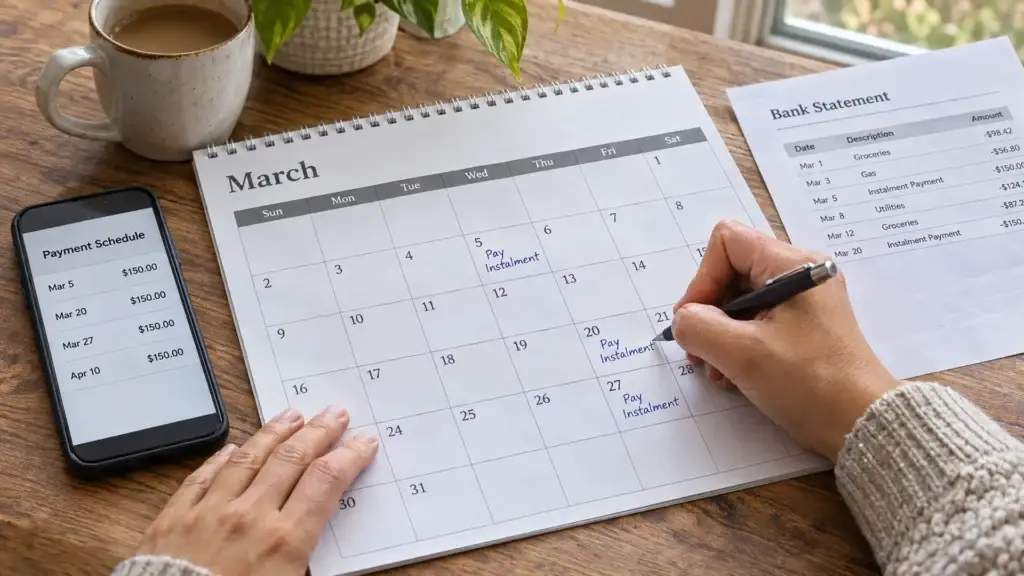
Buy now, pay later plans can make a purchase feel affordable, but several small payments can quickly put pressure on your budget. When installments overlap with rent, groceries, utilities and credit card bills, keeping up can become difficult, even if each payment seemed manageable when you signed up.
If you’re struggling, start by listing what you owe, when each payment is due and how much you need for essential expenses. Contact your providers before the next payments are due to discuss available arrangements. If your income still cannot cover your commitments, a Licensed Insolvency Trustee can help you understand your debt relief options.
With holiday shopping approaching, review those commitments before taking on another plan. Money in your account today may already be needed for next week’s installments.
Why Several Small Instalments Can Become Unaffordable
Buy now, pay later, or BNPL, is credit used to finance a purchase. Depending on the agreement, you may make equal installments, repay a deferred balance or use a financing option attached to a credit card.
The problem can be the combined payment schedule rather than the size of any single purchase. Different providers may collect on different days, making the total commitment difficult to see in one place.
Consider an illustrative example. Three plans each require $40 every two weeks. Together, they take $120 every two weeks, or $240 during a four-week period, before any other debt payments.
That calculation excludes interest, fees and additional purchases. It also shows why treating each plan as “just $40” can lead to a misleading picture of affordability. A zero-interest offer may reduce borrowing costs when you meet its terms. It does not create extra room in a budget that already falls short.
List Every Plan, Balance and Upcoming Withdrawal
Build one payment inventory using each provider’s statements and your bank or card records. Include the remaining balance as well as the next payment, because a small instalment can hide a much larger commitment.
For every plan, record:
- The provider and account or agreement number.
- The remaining balance and number of payments left.
- Each upcoming payment amount and date.
- The bank account or card being charged.
- Any interest, fees or promotional conditions.
- Any overdue amount or unresolved refund.
Include purchases through services such as Affirm or Klarna if you use them, but check your own agreements. Providers, products and payment terms differ.
Next, place those dates alongside paydays and essential bills. If your budget shows enough money for the month but not for a particular week, there may be a timing problem. If the month ends short even after realistic adjustments, the issue is affordability.
Use Caplan’s household budgeting guidance to include irregular expenses as well. A payment plan should leave room for costs you know will eventually arrive.
What Can Happen When You Miss a BNPL Payment
The consequences of a missed payment depend on the financing agreement. They may include fees, a failed withdrawal, changes to promotional terms or collection activity. Check who financed the purchase and how payments are collected. A bank-account withdrawal and a charge to a credit card can create different problems.
If a withdrawal fails, ask whether another attempt is scheduled. Knowing that date helps you avoid assuming the money remaining in your account is available for another bill.
If installments go onto a credit card, paying the BNPL provider does not necessarily mean you have repaid the borrowing. You may have moved the obligation onto a card balance that carries interest.
Credit reporting also varies. Ask the provider whether payment history or defaults are reported and what happens if the account is referred for collection. Do not assume that an account missing from your credit report is a debt you can ignore.
What to Ask Your Provider Before the Next Payment
Contact the provider with a specific explanation of the shortfall and an amount you can realistically afford. Ask what assistance is available rather than assuming a hardship programme exists.
Useful questions include whether the provider can change a due date, spread payments over a longer period or review fees. Confirm whether any change adds interest or extends the total repayment period. Request written confirmation before relying on a new arrangement. Save the correspondence alongside the original agreement.
Deal with returns separately. If you returned an item, keep the receipt and ask both the retailer and financing provider how the refund will affect upcoming payments. Do not assume a return immediately cancels scheduled withdrawals.
Until the provider confirms an adjustment, check the account and payment schedule. An unresolved refund can otherwise be mistaken for money that is already available to spend.
When Automatic Withdrawals Put Essential Bills at Risk
Automatic payments need attention when they could leave too little for housing, food or utilities. Speak with the provider and your financial institution about the withdrawal arrangements and available procedures.
For a pre-authorized debit from a bank account, follow the agreement’s cancellation process and keep written records. Cancelling that authorization does not cancel your purchase contract or the remaining debt.
Credit card instalments may use a different process. Ask the card issuer and provider what applies to that payment method rather than assuming the bank-account rules are identical. Removing an app, replacing a card or stopping one payment is not a repayment plan. You still need to establish what you owe, what happens next and how the balance will be addressed.
If repeated withdrawals are making your budget impossible to manage, Caplan Debt Solutions can help you review your payments and debt options before you commit to another arrangement.
Debt Relief Options When the Shortfall Continues
The right response depends on the full debt picture. A short-term gap involving one small balance may call for a provider arrangement, while several unaffordable debts may require a broader assessment.
Consolidation may help if the new borrowing is affordable and improves the overall cost. Replacing a zero-interest plan with an interest-bearing loan is not automatically an improvement, even if managing one payment feels easier.
Compare consolidation with other debt solutions using the total cost, repayment period and effect on your household budget.
An unsecured BNPL balance may be a claim dealt with through a consumer proposal, subject to the agreement, the nature of the debt and legal exceptions. A trustee needs to review those details rather than assume every retail financing product is treated identically.
A proposal also involves eligibility requirements and creditor review. It should be considered alongside other options, including bankruptcy where appropriate, rather than presented as the automatic answer to missed installments.
What to Bring to a Debt Consultation in Winnipeg
Bring the payment inventory, financing agreements, bank statements, credit card statements and proof of income. Include essential expenses and other debts, even those with no missed payments.
Identify disputed purchases, expected refunds and accounts being collected by someone other than the original provider. Those details help establish who is claiming payment and how much is outstanding.
Caplan Debt Solutions can review your circumstances and explain whether a consumer proposal in Winnipeg or another approach is appropriate. You can ask for help before the next failed withdrawal, with a clearer picture of the commitments already attached to your paycheque.
Frequently Asked Questions
Do I need to disclose a small BNPL balance to a trustee?
Give your trustee a complete list of debts, including small BNPL balances. Include accounts that do not appear on your credit report so the assessment is based on the full picture.
Is deferred payment financing the same as paying in four installments?
Deferred payment financing can have different terms from a pay-in-four arrangement. Check whether a balance becomes due all at once and whether interest applies if you miss the promotional deadline.
Can I deal only with the retailer about repayment problems?
You may need to contact the financing provider as well as the retailer. The purchase and financing can involve separate agreements, so ask who has authority to change your payment terms.
Should I open another BNPL plan while arranging repayment?
Avoid adding commitments your existing budget cannot support. Calculate the remaining payments across all current plans before considering another purchase, even if the new offer advertises no interest.